Beginner Crypto Mining Setup: What You Need Before Buying Your First Miner
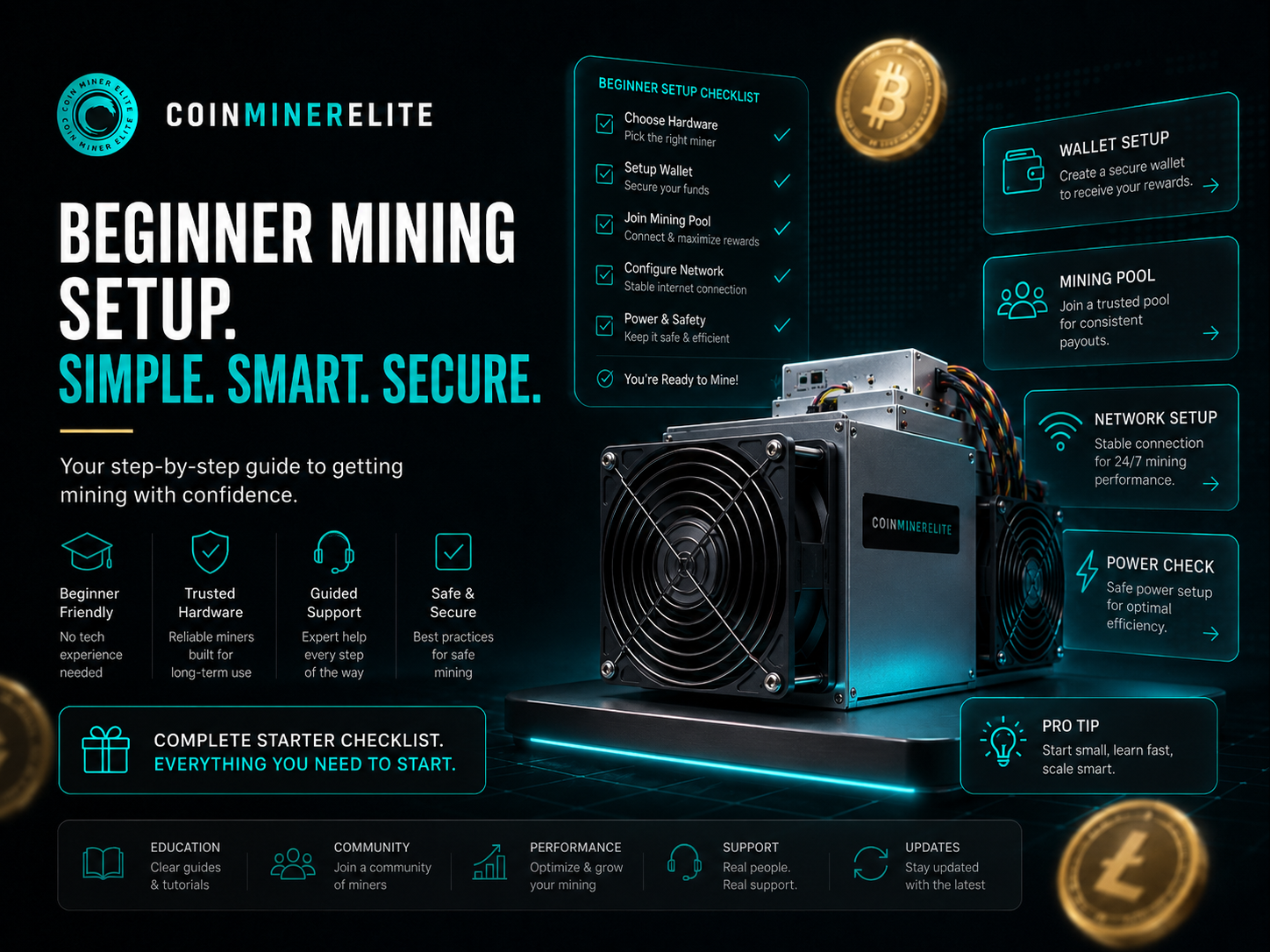
A successful first mining setup should feel clear, not overwhelming. The goal is not to master everything on day one—it is to understand the essentials well enough to choose the right miner, prepare the basic infrastructure and start with confidence. This guide walks through the main decisions beginners should make before placing an order.
A practical starting point if you want a structured path from research to setup.
Focus
Clarity over complexity
Learn the essential decisions that matter most before your first order.
Next step
Build your checklist
Use this page to create a simple, realistic setup plan.
01
Choose the right miner category first
The first beginner decision is not the exact product—it is the category of miner you need. Bitcoin, Kaspa and Scrypt mining all use different hardware classes, so the correct starting point is to decide what you want to mine.
This dramatically simplifies the buying process because it removes irrelevant machines from consideration before you even start comparing prices or performance.
BTC → SHA-256 hardware
KAS → kHeavyHash hardware
LTC / DOGE → Scrypt hardware
02
Prepare the payout basics before delivery
A miner needs somewhere to send rewards and somewhere to connect for work. That means you should have a wallet and a mining pool plan before the machine arrives. Even if you adjust providers later, having the basics ready makes onboarding far easier.
Beginners often postpone this step until the miner is delivered, which turns setup day into unnecessary stress.
Create or choose a secure wallet
Join a suitable pool for your chosen coin
Store login details and recovery information safely
03
Understand the physical setup
You do not need an industrial facility to begin, but you do need an honest view of your space. Think about where the miner will sit, how it will stay cool, how it will be powered and whether the room can handle the sound and heat.
This physical planning is what turns a “good idea” into a working setup. A beginner-friendly setup is one that can run safely and consistently, not just one that is affordable.
Check outlet type and power availability
Plan airflow and exhaust direction
Use a stable wired or reliable network connection when possible
04
Monitor, do not guess
Once the miner is running, the next beginner skill is monitoring. You want to know whether the machine is hashing correctly, whether uptime is stable and whether performance matches your expectations.
Monitoring is also how you learn. It shows you how changes in pool status, ambient temperature or uptime affect real output over time.
Track hashrate and uptime
Watch power and temperature behavior
Use the ROI calculator to compare expectation versus reality
05
Start small, then improve
Beginners do not need to build the perfect mining operation on the first attempt. A better approach is to start with a sensible setup, learn from real experience and improve over time.
That is why a guided first order is often more valuable than simply buying the largest possible unit. Strong fundamentals now make every future hardware decision easier.
Use these quick answers to remove uncertainty before you compare models, estimate ROI or proceed to checkout.
What do I need before buying my first miner?
At minimum, you should know the coin or algorithm you want to mine, where the machine will be placed, how it will be powered, which wallet you will use and which mining pool you plan to connect to.
Do I need technical experience to begin?
No, but you do need a willingness to follow a structured process. A beginner setup becomes much easier when you focus on the basics: the right miner, safe power, a stable network and clear wallet/pool preparation.
What is the biggest beginner mistake?
Buying a miner without thinking about environment and power requirements. Many beginners compare only price and hashrate, then realize too late that the unit does not fit the intended space.
Should I start with Bitcoin, Kaspa or Scrypt mining?
That depends on your goals, budget and setup. The most important step is understanding that each category uses different hardware and should be evaluated separately.
Do I need to set up the wallet and pool before the miner arrives?
It is strongly recommended. That way you can focus on the physical installation and activation process instead of scrambling to prepare everything at the last minute.
What if I am unsure which first miner is realistic?
Use this guide to create a shortlist, then reach out to support. A short conversation about your budget, space and electricity situation can save a lot of frustration later.
Ready to compare?
Choose the right miner with confidence.
Compare specs, estimate ROI and contact us if you need help selecting the right model before checkout.