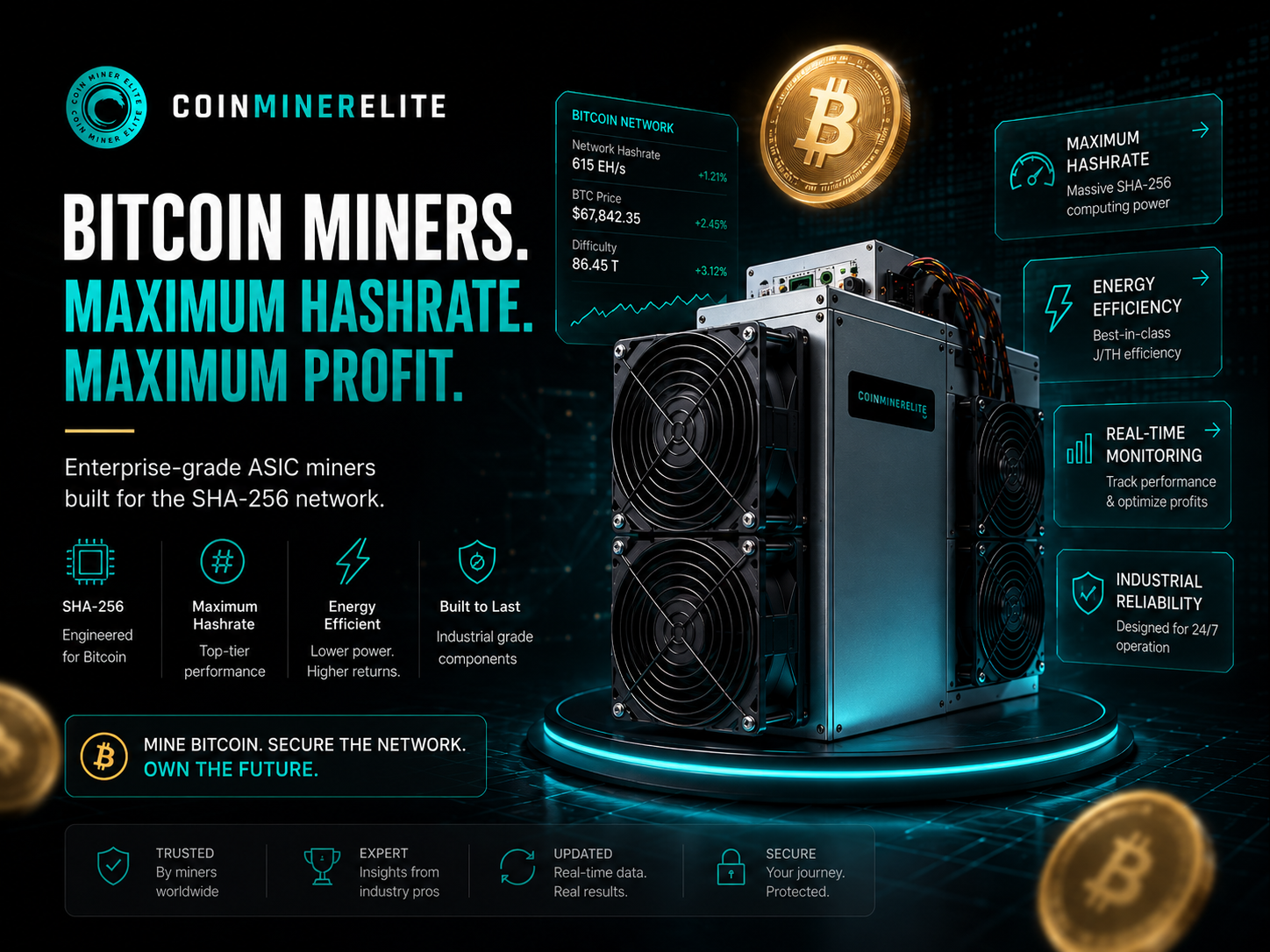
Bitcoin Miners: SHA-256 ASIC Hardware for BTC Mining
Bitcoin mining requires dedicated SHA-256 ASIC hardware, and choosing the right unit means balancing hashrate, efficiency, power demand and environment suitability. This page explains what matters when you are comparing BTC miners and how to move from generic “best Bitcoin miner” searches to a more realistic decision.
Useful if you want a dedicated Bitcoin mining overview before comparing individual models.
Focus
SHA-256 performance
Understand the trade-off between raw power and practical operating conditions.
Next step
Check environment fit
A high-output BTC miner only works when your setup can support it.
01
Bitcoin mining is a dedicated hardware category
Bitcoin is not mined effectively with generic consumer hardware. To mine BTC, you need a SHA-256 ASIC miner built for that algorithm. That means Bitcoin miners should be compared against other Bitcoin miners—not against Scrypt or Kaspa machines.
This may sound obvious, but category clarity is what turns broad research into a focused and practical buying decision.
BTC miners = SHA-256 only
Compare BTC units with other BTC units
Use category pages and compare tools to stay focused
02
Hashrate matters, but efficiency still decides the outcome
Buyers are often drawn to the biggest TH/s number they can find, but the strongest output is not always the best decision. Power draw, efficiency and the total operating environment still determine whether the machine makes sense in practice.
For some buyers, a more manageable BTC miner with better fit and efficiency is the better long-term decision than a headline-grabbing unit that stresses the setup.
Review TH/s and J/TH together
Look at power draw before you judge value
Match the miner to your real operating conditions
03
Choose between compact and larger-scale BTC setups
Compact Bitcoin miners can be suitable for learning, smaller spaces or controlled experimentation. Larger high-output miners deliver stronger performance but generally demand more serious power and cooling planning.
Your best option depends on what role the miner will play in your operation. The “right” machine for a hobbyist and the “right” machine for a dedicated mining room are often completely different.
Compact models → learning and manageable deployment
Hydro or industrial-style rigs usually need advanced planning
04
Prepare for the full operating picture
Before you order, think beyond the initial product price. A Bitcoin miner’s total reality includes electricity cost, heat management, noise profile, uptime and long-term reliability.
This broader view helps you avoid buying a BTC miner that looks attractive on the listing page but becomes unrealistic the moment it enters your environment.
Run ROI with real electricity rates
Consider long-term uptime and maintenance expectations
Check whether your space can handle the thermal load
05
Use BTC-specific research to narrow your shortlist
The fastest path to a good BTC hardware decision is simple: stay within the correct category, compare realistic candidates and validate the environment before checkout. That method is more useful than chasing generic “top 10” lists without context.
Use this page together with the compare tool and ROI calculator to move from broad interest to a specific, confident shortlist.
Compare BTC products side by side
Run one or two conservative profitability scenarios
Ask support if you are unsure which category of BTC miner is most realistic
Use these quick answers to remove uncertainty before you compare models, estimate ROI or proceed to checkout.
What kind of miner do I need for Bitcoin?
You need a SHA-256 ASIC miner. The right one depends on your power setup, heat tolerance, noise expectations, budget and whether you are running a compact or more demanding environment.
Can I mine Bitcoin at home?
Yes, but only if your environment can realistically support the machine you choose. Compact BTC miners are usually more practical for home setups than larger industrial-style units.
Is a more powerful BTC miner always better?
No. A stronger unit can be worse for you if it creates unsustainable power or cooling demands. The best miner is the one that fits your environment and economics.
What is the most important metric besides hashrate?
Efficiency is one of the most important metrics because it affects ongoing operating cost. Power draw and environment fit are also critical.
Should beginners buy hydro-cooled Bitcoin miners?
Usually not unless they already understand the infrastructure requirements. Most first-time buyers benefit from a more straightforward and manageable setup.
What is the best next step if I want to mine BTC?
Browse the Bitcoin category, compare candidate models and run ROI scenarios with your electricity assumptions. That will give you a far better decision basis than a generic recommendation.
Ready to compare?
Choose the right miner with confidence.
Compare specs, estimate ROI and contact us if you need help selecting the right model before checkout.